Tracing Promotional Credit Flows in Mobile Live Dealer Applications
Written by Ines Brooks · Aug 14, 2026

Tracing Promotional Credit Flows in Mobile Live Dealer Applications
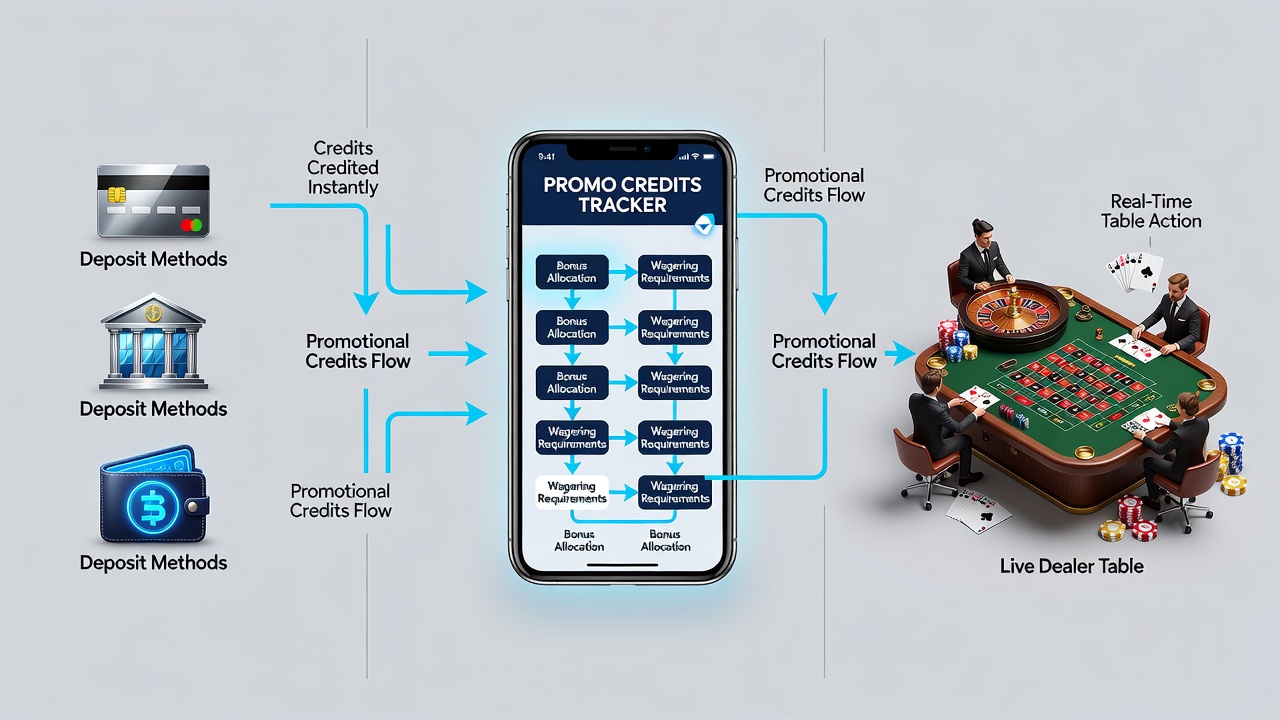
Smartphone applications have reshaped how promotional credits move from initial deposits through to live dealer tables, creating traceable pathways that combine payment processing systems with game-specific allocation rules. Deposits made via credit cards, e-wallets or bank transfers trigger automated bonus calculations that apply directly to a player's account balance before any live dealer session begins.
Payment gateways integrated into these apps verify transactions in real time, and once funds clear, promotional credits appear as separate line items that carry their own wagering conditions. This separation allows operators to track which portion of a balance stems from deposits versus bonuses throughout the entire session lifecycle.
Deposit Methods and Initial Credit Assignment
Common deposit channels in smartphone casino apps include instant bank transfers, digital wallets and prepaid vouchers, each feeding into the same backend system that tags incoming funds with metadata. That metadata determines eligibility for promotional overlays, such as percentage-based matches or fixed credit awards, which activate automatically once the deposit threshold is met.
Researchers at the University of Nevada, Reno documented how these systems log every credit allocation event with timestamps and payment source identifiers, producing audit trails that operators use for compliance reporting. Data from the American Gaming Association shows that mobile deposit volumes have grown steadily, with bonus credits representing a measurable share of total player balances in regulated markets.
Smartphone Application Mechanics
Mobile apps handle credit flow through layered software modules that separate deposit confirmation from game access, ensuring promotional balances remain distinct until wagering requirements are satisfied. Players select a live dealer table only after the app confirms that available credits meet minimum stake thresholds, a step that prevents partial bonus funds from entering table sessions prematurely.
Internal routing logic directs promotional credits toward table games that accept bonus play, while blocking or converting them on titles that exclude such funds. This routing occurs server-side, so the smartphone interface simply displays updated balance figures that reflect real-time deductions as bets are placed.
Pathways to Live Dealer Tables
Once credits reach the account, the app presents live dealer lobbies filtered by game type and stake range, allowing users to transfer funds to specific tables without manual intervention. Each table connection carries a transaction record that links the original deposit source to the credits now in play, creating an unbroken chain visible in backend databases.
August 2026 updates to several major mobile platforms introduced enhanced API calls between payment processors and live dealer servers, shortening the interval between deposit confirmation and table entry. These changes reduced average credit transfer times while preserving the distinct labeling of promotional versus cash balances throughout every hand.
Live dealer software records each bet as a debit against the tagged credit pool, so operators can generate reports showing how much promotional value reached the tables versus how much remained unused. This granular tracking supports both internal analytics and external audits required by regional gaming authorities.
Regulatory and Technical Oversight
Canadian provincial regulators, including the Alcohol and Gaming Commission of Ontario, require that promotional credit flows remain transparent across mobile platforms, mandating that apps display clear distinctions between deposit and bonus funds at every stage. Similar standards appear in Australian state frameworks, where operators must maintain logs that allow reconstruction of any credit's journey from deposit to table outcome.
Technical standards specify encryption protocols for these logs and define retention periods that extend beyond individual player sessions. Compliance teams review sample trails monthly to confirm that promotional credits allocated at deposit reach only permitted live dealer variants.
Conclusion
The movement of promotional credits through smartphone applications follows a structured sequence beginning with verified deposits, passing through automated allocation engines, and terminating at live dealer tables under controlled conditions. Audit mechanisms embedded in both payment and gaming layers preserve the traceability required by multiple regulatory bodies, ensuring that every credit retains its source identity until fully converted or forfeited. This architecture supports consistent reporting across jurisdictions while accommodating the real-time demands of mobile live dealer environments.